Carburetor Jetting Software Applications
Aircooled.Net Inc. 379 West 6500 South Murray, Utah 84107 USA Email: PHONE (LEAVE A MESSAGE): 801-453-1906 We rely heavily on email as the most efficient and accurate way to serve our customers. Please only contact us by PHONE if you are unable to email for some reason, or if your situation (or tech question) is complicated. We do NOT offer 'formal' phone hours, but instead RETURN ALL MESSAGES (usually within 1-2 business days) at a time when we are able to focus on your situation/questions and aren't preoccupied with the flurry of shipments that we are shipping to waiting customers in the busy part of our day. We return calls DURING THE DAY at various times throughout the week as time allows, so please be prepared to wait a few days for us to call you back.
If you are phoning for status of a backorder or order in process, you may receive your reply by EMAIL. Aircooled.Net offers the finest carburetor setup for all your new Weber Carburetors purchased from us. We have extensive experience with the Weber IDA, IDF, DFAV/DFEV (Progressive), and ICT.
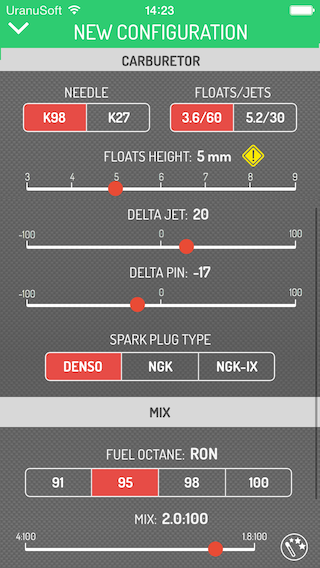
The world's No1 Carburettor Jetting and Kart setup software! Rotax MAX Jetting Vortex RoK Jetting ICC Jetting KF Jetting Dellorto Carburettor Jetting Keihin Jetting Mikuni Jetting Carb Tuning. Aircooled.Net offers the finest carburetor setup for all your new Weber Carburetors purchased from us. We have extensive experience.
We have jetted thousands of Webers for Aircooled VWs, and know what works and why. Any needed jet and emulsion tube changes are included at no additional charge when you purchase this service at the time of your Weber Carburetor Kit purchase. We disassemble the carburetors, and then clean and inspect them. We trim gaskets, replace parts, adjust them properly, and then finish it off by jetting it to your needs, taking into account your engine specs, usage, and even your elevation! Weber carburetors come with out-of-the-box jetting that is usually different than what you need, often the cost of the jets and emulsion tubes you need to change to is more than we charge for it including the labor! So this is a great deal for you!
Price: $0.80 ACN Flanged Racing Intake and Exhaust Nut, 8 x 10mm, EACH were designed after evaluating all problems with other nuts. We tried to solve them all with this product! 8mm threads, with a 10mm 6pt hex, and a 13mm flanged bottom to spread the clamping forces! You can torque these to 35lb/ft, though we feel that is excessive. The threads fail at just over 40lb/ft. We have tried these in several different alloys (including Stainless Steel) and success with one combination was the one we used! Once you use these you will never EVER go back to the Brass Nuts (that strip and round off), or the barely better 12mm ones out there.
These are a LOT smaller than 11mm on the Head, and the flange keeps the header far enough away from the nut to allow your socket or wrench head enough room to get on and off! We use these all over because they are so useful. The obvious application is header nuts, when you have a larger than stock header. These even work on exhausts as big as 2 1/4'!!!!! The not so obvious application are to hold down your intake manifold(s)! Now you have a ton of room to use a FAST Ratchet with a long extension above the carb top! You can take a dual carb system off in under a minute after a little practice!
Imagine, no more bloody knuckles after an hour of fighting your car!!!! Price: $4.95 Universal Crankcase Ventilation Fitting for Air Filters, Fits 1/2' (12mm) Hose gives you a way to route your engine's blow-by into your air cleaner(s) to keep the engine clean and running properly. Simply drill a hole in the air filter and mount this fitting, then you have a place to route your crankcase breather hoses!
This ventilates your crankcase, and prevents sucking in unfiltered air during high vacuum conditions like deceleration. You can use one in one filter, or one in each filter and T the hoses to even the distribution.
Price: $5.95 Pre Heat Riser Block Off Kit, Pair are used to block off the heat riser ports in the stock or aftermarket exhaust system, when converting from a center mount to dual carburetors for example, you use these block-offs to make the job easy! Bolt them on with the supplied gasket and you are set! If you have OPEN preheat flanges on your exhaust system, you can use these to easily and quickly close them off.
The most common situation is where you had a stock carburetor, and now have dual carbs! Duals don't need preheat, but the flanges are open! Voila' Comes with 2 block off flanges and gaskets. Many owners buy these when fabricating their deluxe pre-heat system on their aftermarket headers. It's cheaper and easier to buy these and drill a hole in the center for their pre-heat flanges than trying to fabricate from scratch! If you do this we recommend 5/8' seamless mild steel tubing.
Price: $11.00 7mm Low Pressure Fuel Hose, 7.0 X 2.5mm is the best carbureted fuel hose in our opinion. This is braided for abrasion resistance, and has a cloth braid covering, that is easy to grip to put the hose on and off. The covering also looks 'new' far longer. Hose clamps are not even needed, because the cloth woven on the hose surface acts like a 'Chinese finger trap', and keeps the hose tight on the fitting.
Some owners choose to err on the side of caution and use clamps also. Price is for a meter of hose.
Price: $14.95 Dual Carburetor Access Panel, Each is the perfect, inexpensive, and rust-proof solution to accessing the outsides of dual carburetors in confining engine compartments, such as early VW Beetles. Installs easily to any flat surface with bolts or rivets (screws is tacky, and leaves 'knuckle eaters' that could also damage tail light wiring!). Simply figure out the center of your hole, trace the outline of the cutout, remeasure (un-cutting is especially difficult), cut and trim, the secure the way you prefer! The actual 'cap' is threaded and spins in and out, it's leak and rust proof!
You need 2 of these to do a pair of dual carbs. THESE ARE NOW 5 INCHES IN DIAMETER (prior to 2017, the panels we sold were a smaller 4' size, but customer feedback suggested that larger ports would be even more convenient). Price: $19.95 Uni Sync Carb Syncronizing Tool, ICT, FRD, Kadron, and PDSIT is an excellent tool for synchronizing dual 1bbl carburetors. YOU SHOULD NOT USE THIS WITH DUAL 2BBL CARBURETORS, because it's a restrictive device.
On externally vented float bowls used on the Weber IDF, DCNF, IDA, and DCOE, and the Dellorto DRLA and DHLA it disrupts fuel level! With dual 2bbls use our Snail Gauge. This fits flat on the barrel (mouth) of the carburetor. It requires an extension or adapter for Kadrons due to the centrally located air filter mounting stud. Price: $34.95 The best carburetor syncronizing tool made for us to syncronize dual carburetors.
Rather than measuring manifold vacuum via a restriction, it sensitively and accurately measures airflow WITHOUT RESTRICTION. Chinese model for guys wiith no $. This fits inside the barrel (mouth) of the carburetor. It requires an adapter for non-round 'Internal' carb throats such as ICTs and DCNFs.
It also requires an adapter for Kadrons due to the centerally located air filter mounting stud. This is the less expensive Chinese model, NO GUARANTEE OR WARRANTY ON IT! Price: $44.95 Adjustable Fuel Pressure Regulator, 1-4psi, 30-804 is a low pressure fuel pressure regulator that works with most fuels except methanol. This serves as both a regulator AND a fuel line T, to send fuel to each of your dual carbs! This regulator comes with a mounting bracket and hardware, but does NOT have fuel line barbs, which much be purchased separately depending on the size of fuel hose you are using. If you have a single carb, you can simply plug one outlet port on the regulator and run it as just a regulator rather than a Tee also. Note that proper fuel pressure is critical for proper carburetor operation.
Weber IDF, IDA, ICT, DFEV/DFAV, and DCNFs work best with 3-3.5psi, so this regulator works for all of them, even if you switch carburetors sometime in the future! This is an EXCELLENT regulator to use with the stock fuel pump. Normal methods of dropping fuel pressure with the stock fuel pump are to stack gaskets between the pump and pump spacer, and this does work but it also reduces fuel volume. Using this regulator will keep full volume but wlll drop pressure, which is more desirable.
Price: $47.95 The best carburetor syncronizing tool made for us to syncronize dual carburetors. Rather than measuring manifold vacuum via a restriction, it sensitively and accurately measures airflow WITHOUT RESTRICTION.
This is the top quality GERMAN SK Gauge. This fits inside the barrel (mouth) of the carburetor. It requires an adapter for non-round 'Internal' carb throats such as ICTs and DCNFs. It also requires an adapter for Kadrons due to the centerally located air filter mounting stud. This Sync Model is ideal for all velocity stack and carb throats of 1 5/8 to 2 1/8' (40 to 55mm Diameter). Price: $47.95 Snail Type Syncrometer Carb Sync Tool, GERMAN, BK is the best carburetor syncronizing tool made for us to syncronize the Weber 48 IDA or EMPI 48 and 51 EPC carburetors.
Rather than measuring manifold vacuum via a restriction, it sensitively and accurately measures airflow WITHOUT RESTRICTION. This is the top quality GERMAN BK Gauge. This fits inside the barrel (mouth) of the carburetor, fitting airhorns from 2' (51mm) to 2 5/8' (67mm) in diameter. It requires an adapter to use on the smaller Weber IDF and Dellorto DRLA carburetors. Price: $54.95 This compact solid-state electric fuel pump is the most economical one to do the job.
It is only 1lb in weight, it is capable of deliverying 30gal/hr @ 3psi fuel pressure, which is the correct fuel pressure for Webers, Dellortos, and Kadrons, and all stock carburetors. The inlet/outlet is tapped to 1/8 NPT fittings for flexible selection of barbs or AN fittings. Note that this pump is inconsistent in it's output pressure, it fluctuates from 2-4psi.
We strongly recommend the Rotary Pump as our favorite electric pump! Barbs NOT included. Price: $59.95 Rotary Electric Fuel Pump, 3.25 psi Low Pressure, 7mm Fuel Inlet and Outlets is a compact solid-state electric fuel pump is the best pump on the market for applications up to 200hp. It is small, light, and quiet! It is also capable of delivering 30gal/hr @ 3psi fuel pressure, which is the correct fuel pressure for Webers, Dellortos, and Kadrons, and all stock carburetors. This is a great pump for up to ~200hp, and comes with mounting hardware and included filter.
This pump uses 7mm lines, so if you have 5mm carbureted fittings on your tank and tunnel, we recommend using a fuel filter to step the size of the hose down, then back up, as required. Price: $64.95 Fuel Pressure Regulator, Basic, Carbureted Engines, 1.5-5psi is a low pressure fuel pressure regulator that works with most fuels except methanol. Fuel pressure is pre-set to 3.5psi, but it can be set to any fuel pressure between 1.5psi and 5psi.
THIS ONE ACTUALLY WORKS, unlike the Purolator, Mr. Gasket, and EMPI Units! This regulator comes with a mounting bracket and hardware, but does NOT have fuel line barbs, which much be purchased separately depending on the size of fuel hose you are using. This regulator is threaded to 1/8' NPT on both inlet and outlet, and does NOT come with fittings!
Buy the fittings you need to match the sizes of your fuel hoses. Note that proper fuel pressure is critical for proper carburetor operation. Holley regulators are 'OK' but don't go below 3psi, and stock carburetors (Solex, Bocar, Brosol, and Kadron) all run best with 1.5-2psi fuel pressure. Weber IDF, IDA, ICT, DFEV/DFAV, and DCNFs work best with 3-3.5psi, so this regulator works for all of them, even if you switch carburetors sometime in the future! Price: $79.95 Innovate Wiring Harness Extension, 18', Fits LC-2, LM-2 and MTX-L, PRIOR TO 2/15/15, for use with 4.2 O2 Sensor, 3828 is for people that have the Innovate LC-2, MTX-L Gauge or Innovate LM-2, with the 4.2 O2 Sensor, but have a rear engined car! The harness that comes with the gauge is too short, so we had this one made! It's 18' long and will allow you to use your new Wideband toy!
This will allow you to use the LM-2 and MTX-L systems in all Rear and Mid-Engined VW and Porsche cars. Vanagons, Busses, 911s, Beetles, Ghias, etc. This does NOT fit the 4.9 O2 Sensors! Price: $84.95 Adjustable Fuel Pressure Regulator, Carbureted Engines, 1.5-8.5psi, 31800.063 is the highest quality regulator we have found. It has 7mm hose barbs.
You can use it with Webers and Dellortos (3.5psi), and Solex/Kadrons (2psi), with a variety of input pressures. This is the finest fuel pressure regulator we have found so far; IT ACTUALLY WORKS! This regulator comes with a mounting bracket and hardware, and has built in 7mm barbs for the fuel hose inlet and outlet. Locknut and adjusting screw, and full instructions. Note that proper fuel pressure is critical for proper carburetor operation. Holley regulators are 'OK' but don't go below 3psi, and stock carburetors (Solex, Bocar, Brosol, and Kadron) all run best with 1.5-2psi fuel pressure. Weber IDF, IDA, ICT, DFEV/DFAV, and DCNFs work best with 3-3.5psi, so this regulator works for all of them, even if you switch carburetors sometime in the future!
Price: $89.95 Innovate Wiring Harness Extension, 18', Fits LC-2, LM-2 and MTX-L, AFTER 2/15/15, for use with 4.9 O2 Sensor, 3889 is for people that have the Innovate LC-2, MTX-L Gauge or Innovate LM-2, but have a rear engined car! The harness that comes with the gauge is too short, so we had this one made! It's 18' long and will allow you to use your new Wideband toy! This will allow you to use the LM-2 and MTX-L systems in all Rear and Mid-Engined VW and Porsche cars. Vanagons, Busses, 911s, Beetles, Ghias, etc. This does NOT fit the 4.2 O2 Sensors! Price: $89.95 Fuel Pressure Regulator AND Filter, Combination Unit, Carbureted Engines, 1.5-5psi is a low pressure regulator which works with most fuels except methanol.
Output is pre-set to 3.5psi, but can adjusted with the turn of a screw to any pressure between 1.5-5psi. This unit also features a 25 micron stainless steel filter element, which catches sand, rust, dirt, and even water! THIS ONE ACTUALLY WORKS, unlike the Purolator, Mr. Gasket, and EMPI Units!
This regulator comes with a mounting bracket and hardware, the barbs are perfect for 5mm and 7mm hose used on vintage VWs. Price: $109.95 Mallory Adjustable Fuel Pressure Regulator, Fuel Injected Engines, 4-25psi, 4307M is designed for Low Presure FI applications, but it can also be used for 4psi carburetoed applications. This is compatible with alcohol and methanol too! This is a 3 port return style regulator, returning excess fuel back to the fuel tank for the coolest running fuel pump. The Bypass Regulator Design results in the coolest fuel pump, while drawing less electrical current, yet always has full volume available! 'Traditional' regulators have problems going from a low flow to a high flow condition quickly (Like a Drag Racing Launch), which this style is designed to do as quickly as possible! This regulator comes with a mounting bracket and hardware, and fittings are threaded to 3/4-16 (-8 AN) with a 1/8' NPT port typically used for a fuel pressure gauge.
It also features a Locknut and adjusting screw, and is capable of regulating ANY Inlet Fuel Pressure down to as low as 4psi. This is an outstanding compact fuel pressure regulator to use in a high flow (racing) application with Weber DCNFs, IDFs and IDAs, as well as Dellorto DRLAs. This is also rebuildable, it's not a 'Throwaway', if it gets old or the diaphragm ruptures. Price: $119.95 This CNC Machined Billet Aluminum Mallory Adjustable Fuel Pressure Regulator, Carbureted Engines, 3-12psi, 4309 is made to match the Mallory 70, 110, and 140 GPH Mallory Comp Fuel Pumps. It's actually rated to a 200GPH volume! This is a 3 port return style regulator, returning excess fuel back to the fuel tank for the coolest running fuel pump.
The Bypass Regulator Design results in the coolest fuel pump, while drawing less electrical current, yet always has full volume available! 'Traditional' regulators have problems going from a low flow to a high flow condition quickly (Like a Drag Racing Launch), which this style is designed to do as quickly as possible! This regulator comes with a mounting bracket and hardware, and fittings are threaded to 3/8' NPT with a 1/8' NPT port typically used for a fuel pressure gauge. It also features a Locknut and adjusting screw, and is capable of regulating ANY Inlet Fuel Pressure down to as low as 3psi. This is an outstanding compact fuel pressure regulator to use with Weber DCNFs, IDFs and IDAs, as well as Dellorto DRLAs.
This is also rebuildable, it's not a 'Throwaway', if it gets old or the diaphragm ruptures. Price: $219.95 Innovate MTX-L PLUS Wideband 4.9 O2 Oxygen Sensor Kit, 3918 is a 'Permanently Mounted' Wideband gauge that fits 2 1/16' Gauge holes (Standard VDO!) Whether you are desiring maximum HP, or MPG, you need to know your fuel mixture EXACTLY to achieve your goal.
This device lets you take the guesswork out! Complete All-In-One Air/Fuel Ratio Gauge Kit. Includes: Gauge, Silver Bezel, Black Bezel, White Faceplate, Black Faceplate, Bosch Wideband O2 Sensor (LSU4.9), 8 Ft. Sensor Cable (Overall length 10 ft.), Exhaust Bung, Program Cable (Only needed for Datalogging and to change the Fuel Type Setting), and Quick Start Guide/Manual.
Isiplot 1 3 Keygens. You will need to download the 'Logworks' software from Innovate's website. Price: $329.95 Innovate LM-2 Wideband Oxygen Sensor Kit, Basic, 3837 is a 'MUST HAVE' for serious tuners. Whether you are desiring maximum HP, or MPG, you need to know your fuel mixture EXACTLY to achieve your goal. This device lets you take the guesswork out!
Innovate LM-2 Wideband Oxygen Sensor Kit, Basic, 3837 is the new LM-2 'Basic' Kit (Single Wideband O2) ONLY which includes the LM-2 meter, Bosch wide-band oxygen sensor, 8 ft sensor cable, cigarette-lighter power adapter, USB cable for PC connection, weld-in bung and plug, LogWorks software CD, and quick-start guide. Price: $419.95 Dual Weber 34 ICT Carb Kit, Type 1 (Upright), Type 3, and Type 4 Engines, Redline is a GENUINE Weber carburetors that are made in Spain, not Chinese copies! Our Dual ICT Weber Carb Kits come COMPLETE with everything you need (Except for intake manifold gaskets, order some extras!) to install them on your Volkswagen! Steel Hex Crossbar and Heim Ball Ends minimize flex, and last longer than the same parts made of aluminum. The dual 34 ICT Weber kit is a budget minded kit that eliminates intake manifold preheat issues associated with center mount carb kits. Price: $439.95 Dual Weber 34 ICT Carb Kit, Type 1 (Upright), Type 3, and Type 4 Engines, CB Performance is a GENUINE Weber carburetors that are made in Spain, not Chinese copies!
Our Dual ICT Weber Carb Kits come COMPLETE with everything you need (Except for intake manifold gaskets, order some extras!) to install them on your Volkswagen! Steel Hex Crossbar and Heim Ball Ends minimize flex, and last longer than the same parts made of aluminum. The dual 34 ICT Weber kit is a budget minded kit that eliminates intake manifold preheat issues associated with center mount carb kits. We offer this kit with the CB intakes, linkage, and air filters, because some folks prefer CB parts over the Redline version. 1 PLEASE NOTE: Product availability can vary and short-term backorders are common. Immediate shipment of requested products is NOT guaranteed.
Orders are processed in the order that they are received and order fulfillment time varies. Product Images are representative only. Actual product may differ in appearance.
Although every effort has been made to provide accurate pricing and product technical and vehicle application information, THIS CATALOG MAY CONTAIN ERRORS (typographical, photographic, or informational). Product prices are subject to change without obligation. In most cases we are able to honor advertised price, but in the RARE case a substantial price increase occurs, you would be notified and given the option to cancel.
All information provided by Aircooled.Net (via website or email) is for USE AT YOUR OWN RISK. All products purchased should be checked and installed by a qualified mechanic. Since Aircooled.Net has no control over product installation, we will not be held liable for any consequential costs or damages associated with products purchased.
Making Magic With Logic And Science Jetting a carburetor is one of the few “black arts” in the automotive world that is still a mystery to most racers and tuners. Most tuners still look at the spark plug, the exhaust port, and the first 6 inches of the header for proper color and make a guess at what jet size change is needed. One of the disadvantages of this method is that the header and spark plug can only indicate what the mixture was at the rpm and load condition at the time. A more scientific or modern method of checking the air/fuel mixture is the use of an infrared exhaust gas analyzer and/or an extended range oxygen sensor in the exhaust system.
With this method, the fuel mixture can be “seen” at any rpm and load condition you wish to check. The content of the engine’s exhaust can show the air/fuel mixture and how efficiently the engine is burning the fuel. The proper tuning of a race engine can make the difference between being the winner and dealing with never-ending hassles, trying to keep up with the competition. For most racers, one of the biggest mysteries is jetting the engine in order to obtain the correct air/fuel ratio necessary for your race engine to supply drivable horsepower under all race load demands and while cruising during caution laps. Having the correct air/fuel mixture for the engine’s needs while cruising at caution speeds is often ignored. If the air/fuel mixture is too rich for the engine while running at caution speeds, the engine may load up and foul the spark plugs.
If the air/fuel mixture is too lean, the engine may run hot. Having an air/fuel mixture rich enough for all racing conditions will allow you to get all the horsepower out of the engine while getting as many laps as possible from a tank of fuel without overheating or doing engine damage that would normally result from having an air/fuel mixture too lean. Achieving this is one of the many tricks it takes to beat the competition to the finish line. This may sound impossible, but new advances in exhaust gas analysis technology have made it possible to “read” and/or record the air/fuel mixture under almost any driving condition.
In the past, exhaust gas analyzers have tended to be large and expensive. We have been using one from the PerformanceGas series of infrared exhaust gas analyzers from OTC/SPX. These units are not only compact and portable, but also affordable for a grassroots racer. Most race carburetors sold today have a generic tune-up or jetting unless the carburetor is built for a specific engine package and fuel. Just adding mufflers or performing any header/exhaust system change (such as adding an “H” pipe into the exhaust) can cause the air/fuel mixture to change, making it necessary to rejet the carburetor.
A carburetor not built and tuned for a specific engine, exhaust system, and fuel must supply an air/fuel mixture rich enough for a variety of engines. If the carburetor is supplying an air/fuel mixture that is too lean, the engine will run sluggish, overheat, or the lean mixture could cause engine damage. If the carburetor is supplying an air/fuel mixture that is too rich, the engine may tend to load up, foul the spark plugs, run sluggish, and lack power. The fuel you use (race or pump), the air density (i.e., barometric pressure, air temperature, humidity), compression ratio, camshaft, exhaust system, ignition timing curve, engine condition, fuel pressure, and so on will all affect the carburetor tune-up needed to get the correct fuel mixture for your engine.
If the rules require mufflers at one track but not at another, the carburetor tune-up will need to be adjusted for the change in exhaust backpressure. The first order of business is to get the correct ignition advance curve for the engine and fuel being used. The fuel pressure must be checked to be sure it has the proper system pressure at all engine load conditions. If the fuel pressure drops below the proper pressure, the carburetor’s air/fuel mixture will go lean and engine damage may follow. Once the ignition advance curve has been confirmed, many of the problems we see can be traced to a fuel mixture that is incorrect for the engine’s needs. Before checking the air/fuel mixture, ignition timing and advance curve must first be correct. Any distributor, performance replacement, or original equipment, must have the mechanical and vacuum advance curves checked and then tailored to the engine and the fuel being used.
(Note: MSD distributors come with a very conservative mechanical advance curve. Bushings and springs are included in the box to get the desired curve.) An incorrect advance curve may cause an engine to lack power, ping, use too much fuel, or cause the engine to overheat. There are two methods we use to check the distributor’s advance curve. One way is to put the distributor on a test stand. The second way is by using an advance timing light such as the Black Light series from OTC/SPX Tool Company. A lean fuel mixture (too little fuel for the amount of air in the cylinder) can cause an engine to stumble or give a rough idle. It can run too hot, overheat, and cause a lack of power or engine failure.
A rich fuel mixture (too much fuel for the amount of air in the cylinder) can cause an engine to “load up” at idle, foul the spark plugs, and also lack power or run sluggish. There are several different methods to determine if the air/fuel mixture is correct. Among them are the following: 1.
Read the spark plugs using an illuminated magnifying glass. This method involves looking at the base of the spark plug insulator (white part of the plug) for a slight coloring on the insulator just above where the insulator comes through the steel case. If the mixture is too lean, it will leave no color. A rich mixture causes the fuel ring to become more prominent.
Over-rich mixtures give the plug a sooty appearance. Another way to determine air/fuel mixture is by pulling the header off and looking at the color of the exhaust port in the cylinder head and at the first 6 inches of the exhaust header.
However, the header and spark plug color can only show what the air/fuel mixture was at the load condition where you did the check. In the days of leaded fuel and point ignition, this method worked quite well. Today’s use of unleaded fuels and high-energy ignition systems has made this method much harder because very little color is seen on the spark plug, making this a job for an expert. Use timed acceleration runs or top speed for the power system. This involves using trial-and-error jetting changes to obtain the best results. Obtaining the correct cruise mixture (which is the air/fuel mixture while the engine drives under light load conditions such as pace laps and yellow flag conditions) is not as easy since it involves jetting the carburetor to get the highest vacuum, then trial and error to get the best engine drivability.
When setting the power and cruise mixtures, it’s always advisable to stay a little rich in order to avoid engine damage. The idle mixture is set using a tachometer to get the max speed from each idle screw and then go leaner to get a 20-rpm drop. This is known as the lean drop method. The easiest and most accurate method we’ve found is with the use of an infrared exhaust gas analyzer like the unit we use from OTC/SPX Tool Company called the Perfor- mance Gas Module.
This unit allows us to determine what the air/fuel mixture is by “reading” the exhaust gases. By using the Performance Gas unit, the carburetor’s jetting (air/fuel mixture) curve can be checked at idle, cruise, or power loads, and then be tailored to what your engine needs to run at its best at all race/driving conditions. An optional method of checking air/fuel mixtures is by using an extended range oxygen sensor installed in the exhaust header. The oxygen sensor is read using a unit referred to as a Lambda meter. This method looks at the unburned combustibles in the engine’s exhaust. The unit supplies an air/fuel mixture reading. The readings are very accurate, but false readings can be created by an exhaust leak, engine misfire, or a high overlap camshaft at lower engine rpm.
All will cause extra oxygen to be in the exhaust, creating an inaccurate air/fuel mixture reading. The most accurate and easiest way to check the jetting (air/fuel mixture) of an engine is by observing the carbon monoxide (CO) reading from any infrared gas analyzer, such as the portable unit we are using. To find this value, place the sample probe into the tailpipe, and then the unit will “read” the exhaust and supply the readings necessary to determine the air/fuel mixture. The infrared exhaust gas analyzer and the Lambda meter method allow part throttle fuel mixtures to be checked, which would otherwise be nearly impossible. The readings from either method can be recorded and later played back or looked at in real time at the track or on a dynamometer. It is important to note that any changes other than jet changes and basic adjustments should be performed by a proficient carburetor expert.
After the basic engine condition and tune-up (fuel pressure, timing curve, and so on) are confirmed to be correct and there are no vacuum leaks, the next step is to determine the air/fuel mixture at idle through 3,000 rpm. If the cruise mixture is off, change the jets to get the air/fuel mixture correct at 2,500-3,000 rpm, or cruise range. Next check and set the idle mixture. If the air/fuel mixture is too lean at idle or part throttle and the idle mixture screws do not provide enough adjustment, the correction may involve enlarging the idle jet.
If the mixture is still lean at 1,000-1,800 rpm, the idle channel restriction, if used, may have to be slightly enlarged to allow more fuel to be delivered at part throttle. This lean condition at part throttle will cause the engine to miss or stumble, due to the lean air/fuel mixture. This problem is common on many carbs (a notable exception is the Demon line of carburetors, which have used the PerformanceGas to do exhaust gas analysis along with dyno, track, and drivability testing to establish the factory fuel curve that allows for a stumble-free guarantee). If the air/fuel mixture is too rich at idle and part throttle, the idle jet/restriction may be too big and may need to be replaced with a smaller one. The next step is a track test using a portable infrared exhaust gas analyzer to check the cruise speed air/fuel mixture main jetting, followed by the power air/fuel mixture under load. During a road/track test, you are able to read and correct the jetting in order to have the proper mixtures at idle, cruise/light throttle, and power/wide-open throttle.
A carburetor has an accelerator pump, idle, main jets, and, in most cases, a power system designed to supply the correct air/fuel mixture for the engine’s demands. An idle system has an idle jet/restriction that must be changed to supply the desired fuel mixture for idle and off-idle engine demands. For a carburetor that uses a power valve, the main jet size determines what air/fuel mixture is delivered to the engine at light load/cruise speeds (1,500 rpm and up). The power valve restriction (under the power valve) is the determining factor in the air/fuel mixture that the carburetor will supply when the power valve is open; a 6.5-inch power valve will be open and supplying the richer air/fuel mixture needed under high power demands anytime the vacuum is below its 6.5-inch opening point. A carburetor that uses metering rods in the primary jets (such as a Quadrajet) will use the metering rods to change the air-to-fuel ratio for the power and cruise mixture demands of the engine. Remember, the larger the metering rod diameter, the leaner the air/fuel mixture will be. The accelerator pump adds fuel as the throttle valves are opened.
Tuning the accelerator pump squirter volume and duration is mainly trial and error. For a Demon- or Holley-style carburetor, the combination used most often is a 0.031-inch squirter, along with a pink pump cam. We often shim the accelerator pump duration spring to make the pump more active. Many race-designed carburetors have changeable idle and high-speed air bleeds, but I will leave their affect on the fuel curve to be discussed at another time.
Readings provided by exhaust analyzers. * CO (carbon monoxide): We use the reading from an infrared gas analyzer to determine the air/fuel ratio.
(Note: CO is partially burned fuel.) * HC (hydrocarbons): The amount of unburned fuel or an indicator of an engine misfire. The best mixture gives you the lowest HC. * CO2 (carbon dioxide): The product of complete combustion.
The best mixture gives you the highest CO2 reading. * O2 (oxygen): A high O2 reading indicates a lean mixture or an exhaust leak. (Note: if O2 is above 2-3 percent, CO readings will not be accurate. The best power and cruise air/fuel mixtures (CO) will burn all the O2 in the cylinder and create the lowest HC reading (misfire). They will also cause the CO2 reading to be its highest. A starting point for air/fuel mixtures for most race engines is.
Idle: 1-3 percent CO or a 14.1-13.4:1 air/fuel mixture Cruise rpm: 1-3 percent CO or a 14.2-14.0:1 air/fuel mixture Power mixture and acceleration: 6.6 percent CO or a 12.0:1 air/fuel mixture for a “normal” engine; a high performance engine with improved combustion chamber design such as a Winston Cup engine, in some cases, may use a slightly leaner power mixture of 4 percent CO or a 13.0:1 air/fuel ratio. Sugar Bytes Cyclop V1.0.1 Incl Keygen Win. The Lambda meter method uses an extended range oxygen sensor to determine the fuel mixture by analyzing the unburned combustibles in the exhaust gas. An extended range oxygen sensor can read air/fuel mixtures as rich as 10 to 1. On the lean side, it can read air/fuel mixtures of 19 to 1 or leaner (a standard oxygen sensor is only accurate at air/fuel mixtures of around 14.7 to 1).
This method has the advantage of extremely fast reaction times for the readings, but it can be less than accurate on an engine with a race cam at other than high load conditions because of the excessive oxygen in the exhaust created by the cam overlap. The use of an infrared exhaust gas analyzer, while slower in reaction time, has the advantages of reading the oxygen/unburned combustibles content of the exhaust and determining the air/fuel mixture by reading CO.
The engine’s rate of misfire can be determined by reading the HC, and the engine’s efficiency can be determined by the CO2 reading. When the engine is being used at a racetrack or anytime you are trying to get the very most from the engine, the air/fuel mixtures should be adjusted correctly for the ever-changing air density. First, the baseline tune-up for the air/fuel mixtures must be set and correct for the conditions of testing. The next step is fine-tuning for changes in the air density. The readings from a barometer as well as air temperature and humidity gauges can be used to calculate the density altitude or the air density ratio (ADR percentage) change from your baseline jetting. Knowing the density altitude and comparing it to what it was when you established your baseline tune-up will tell you which way you should change your fuel curve for the weather conditions.
The suggested change in jet size is to go down one jet size for every 1,500 feet in density altitude you go up. Conversely, for every 1,500 feet you go down in density altitude, go up one jet size.
A lot of racers use density altitude as a tuning aid, but ADR percentage is more user friendly. ADR percentage is easier to use because of the following: If the air quality goes up 2 percent, the engine fuel must increase 2 percent to keep the same tune-up.
The ADR percentage and density altitude are both air quality indicators. ADR is expressed in percent of standard conditions, and density altitude is expressed in feet above the same standard conditions.
The weather station from Computech Systems offers both the RaceAir Competition Weather Analyzer and the RaceAir Pro. The RaceAir Competition Weather Analyzer supplies a reading for the density altitude or the air density ratio. The RaceAir Pro has many additional features, including a program that can supply you with a suggested jet change that would be correct for the current air density. These changes in jet size are necessary because as the density altitude goes up, the air becomes thinner, thus the engine needs less fuel. By using the density altitude or the ADR percentage to help calculate which jet size to use, it becomes easy to keep up with the ever-changing weather conditions and stay a step ahead of the competition. This information can also be used to determine which jet you should change to when going to a race at a high-altitude racetrack before you even get there. A properly tuned fuel and ignition system will allow your race engine to perform up to its potential and will supply you a better running, more reliable race car.
Using an extended range oxygen sensor combined with an infrared exhaust gas analyzer and then reading the spark plugs is the best way to know if the air/fuel mixture is correct for your engine. Taking the time to properly tune your race engine’s fuel system will not only allow you to unlock all its power, it may help avoid destroying an expensive race engine due to an incorrect fuel system tune-up. Whether you purchase a new or used infrared exhaust gas analyzer or borrow one from another racer, this method of checking and setting the air/fuel mixture can help you get the most out of your engine. For a more detailed explanation of the use of a five-gas infrared exhaust gas analyzer in fuel system diagnosis, see www.automotiveu.com.